Whitbread Creative Operations | Brand Identity System Implementation
Translating a new brand platform into an enterprise-wide operating system.
Issue
The launch of the ‘Rest easy’ brand platform required more than creative expression. It demanded a structured transformation of visual identity, tone of voice and application standards across a multi-brand, multi-channel organisation.
Without clear governance and structured alignment, the risk was fragmentation – consistent application, diluted messaging, and stakeholder confusion during a live brand transition.
The challenge was to create a unified, scalable brand framework that could be adopted confidently across internal teams and external partners.
Insight
A brand book is not simply a design document – it is an operational control tool. It provides clarity, reduces ambiguity and ensures consistency across every touchpoint.
To succeed, development needed to be collaborative but controlled. Input from internal stakeholders and agency partners needed to be structured and transparent to avoid version confusion or misalignment.
Idea
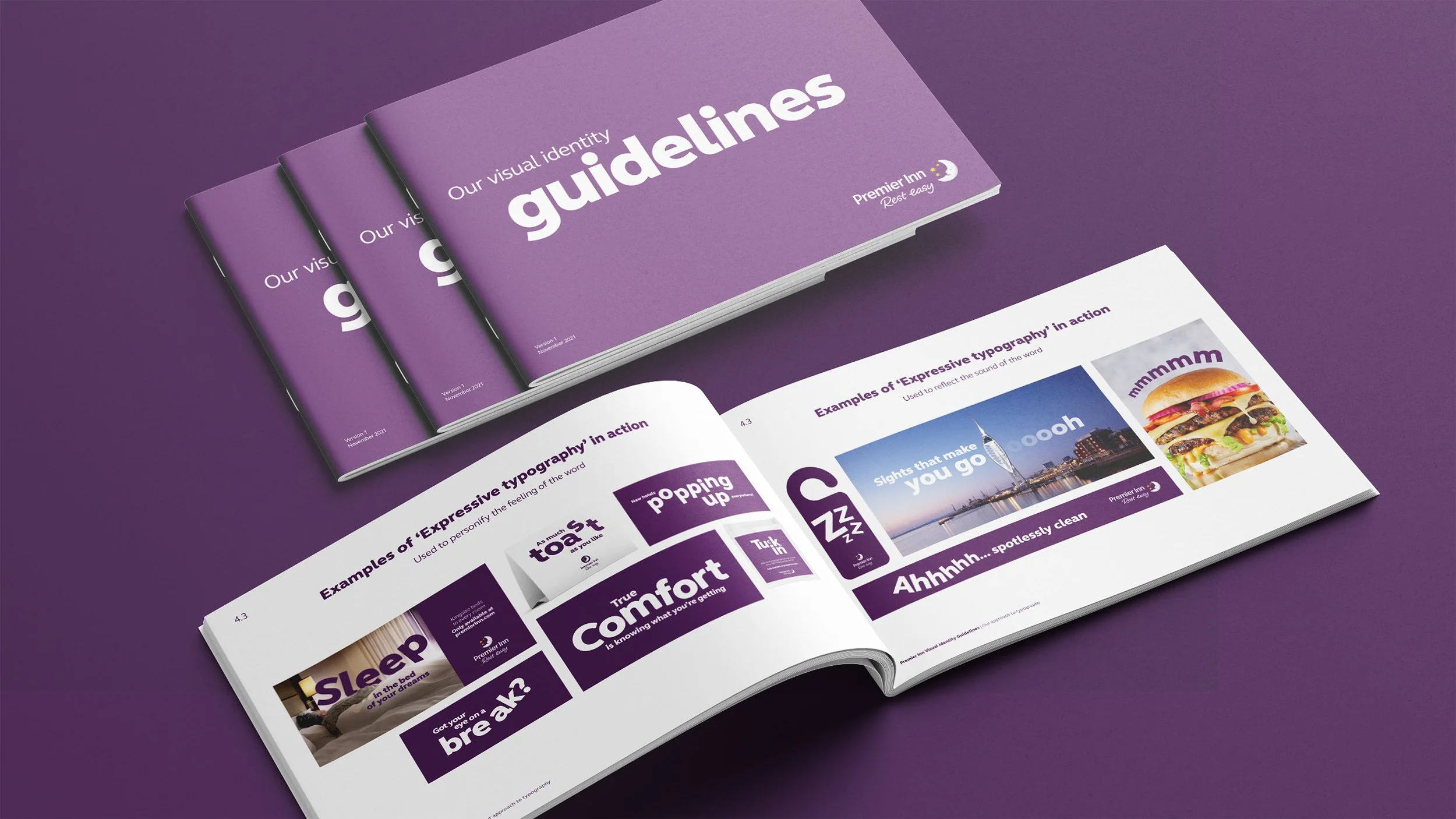
I facilitated the full development of the new brand guidelines, working alongside a lead designer and coordinating collaborative workshops both in-house and with Leo Burnett.
To maintain clarity and alignment, I created a structured, cloud-based working deck that acted as a live project book. This allowed stakeholders to contribute in an organised way while maintaining version control and editorial oversight.
The resulting brand framework codified the ‘Rest easy’ platform across visual identity, typography, colour systems, iconography, photography and tone of voice. Clear application examples and governance guidance ensured usability across digital, CRM, POS and internal communications.
This was not simply documentation – it was the operational foundation for brand migration.
Impact
The new guidelines enabled consistent adoption of the repositioned identity across channels and environments. Teams gained clarity and confidence in applying the brand, reducing the risk of interpretation and rework.
The framework became a reference point across the organisation, supporting the phased rollout of the new identity and protecting brand integrity during transition.
By structuring collaboration and embedding governance from the outset, the brand evolution was implemented with control rather than fragmentation.